
There’s a strange kind of exhaustion that comes not from a lack of sleep, but from being awake at the wrong time. You’ve landed in a stunning new city, ready for adventure, yet your brain insists it’s 3 a.m., while the local clock screams noon. Welcome to jet lag, the ultimate travel paradox: your body is present, but your internal rhythm is still thousands of miles away. It’s one of the biggest challenge travelers faces when crossing multiple time zones.
Jet lag isn’t just feeling tired. It’s the biological clash between your body’s natural circadian clock and the new time zone you’ve entered. Symptoms range from brain fog and irritability to digestive issues and midnight wakefulness. Basically, you traveled faster than your body could adjust to the new time zone.
The good news? You don’t have to suffer in silence. By understanding the science behind this internal time war, you can outsmart jet lag before it steals your first day of vacation. In this blog, you will discover what causes jet lag and the best practical tips to help your body adapt faster so you can enjoy your trip. Some strategies can make a big difference. Ready to reset your clock? Let’s dive in.
Understanding Jet Lag: Causes and Effects
Causes: Your body follows a natural daily cycle that tells you when to wake up, eat, and sleep. This inner schedule is mostly guided by natural sunlight. When you travel quickly across multiple time zones ex: you fly from New York to London, your watch changes by five hours, but your body’s rhythm stays stuck on New York time. That mismatch is jet lag.

Other factors make it worse, such as dehydration from dry cabin air, poor sleep on the plane and changes in meal times. Factors such as age, stress, lack of sleep before the trip can also increase your jet lag symptoms. Your brain gets confused because the sun is rising or setting at “wrong” hours compared to what it expects.
The effects of jet lag go beyond just feeling sleepy:
- Most people experience extreme tiredness during the day and trouble staying asleep at night.
- Your thinking can feel foggy, making it hard to focus or remember simple things.
- Trouble sleeping at night
- You might also feel irritable, anxious or generally off.
- Physical symptoms are common too, like an upset stomach, loss of appetite or headaches.
- Some people even feel dizzy or mildly disoriented.
The good news is that your body can adjust, usually at a rate of about one or two time zones per day. Until then, these effects can make your first few days of travel harder than they need to be.
Why Does Jet Lag Happen?
Your body has an internal clock, often called the circadian rhythm, that tells you when to wake up, eat, and sleep. Jet lag happens when your body’s internal clock becomes out of sync with the local time of a new destination. Your body naturally follows a daily rhythm based on sunlight, sleep, meals, and regular routines. When you travel quickly across several time zones, especially by airplane, your body cannot adjust immediately to the new schedule.
For example, your destination may be nighttime while your body still believes it is daytime. This mismatch can make it difficult to fall asleep, wake up at the right time or feel fully energized during the day.
The more time zones you cross, the stronger jet lag may become. Traveling east is often harder because it forces the body to sleep earlier than usual, while traveling west is generally easier since staying awake longer is more natural for many people.
How Time Zones and Circadian Rhythms Affect Your Body
Your internal clock, the circadian rhythm, runs on a roughly 24-hour cycle and tells you when to feel awake, hungry, sleepy and alert. It is mainly controlled by exposure to natural light and darkness.
Normally, your internal clock stays synced with the sun where you live. Morning light wakes you up, and evening darkness triggers sleep. But when you fly quickly across multiple time zones, ex: say, from Los Angeles to Tokyo. Your surroundings change instantly. The sun rises and sets at completely different hours. However, your internal clock cannot change that fast. It remains stuck on your home time.

This creates a mismatch. In Tokyo, local time might say 10 a.m., but your body still thinks it is 6 p.m. back in Los Angeles. Your brain receives mixed signals: sunlight tells you to wake up, but your cells are still producing sleep hormones. At the same time, your stomach expects meals on the old schedule and your body temperature follows the old rhythm. This internal confusion causes all the familiar symptoms: daytime exhaustion, nighttime alertness, brain fog, and digestive trouble. Your clock will eventually adjust, usually at a rate of about one or two time zones per day. Until then, you are living out of sync.
Pre-Trip Preparation: Setting Yourself Up for Success
The best time to fight jet lag is before you even leave.
- Start by gradually and slowly change your sleep schedule a few days before departure, shifting your schedule toward your destination’s time zone. A few days before your trip, go to bed 30 to 60 minutes earlier if you are traveling east or later if you are heading west.
- Also adjust your meals time accordingly, eating at “destination time” helps reset your internal clock.
- Stay well-hydrated in the days leading up to your flight. Avoid heavy alcohol and too much caffeine, as both can disrupt sleep and worsen dehydration. Dehydration often increases fatigue and headaches during long flights
- Get plenty of rest before traveling. Starting a trip already tired will only make jet lag feel worse.
- Consider using light to your advantage. If possible, spend time outside in natural light during the hours when you want to be awake at your destination.
- Some travelers also find it helpful to gradually switch their watch or phone to the new time zone a day or two early. This small mental shift can prepare your brain for the change ahead.
A little planning on the ground can save you from days of exhaustion in the air.
Best Flight Times to Minimize Jet Lag
The best time to take your flight is based on the time you will arrive at your destination. The timing of your flight can make a huge difference in how badly jet lag hits you. Many travelers prefer overnight flights, often called “red-eye flights,” especially for long international trips. Sleeping on the plane can help your body adapt more quickly to the destination’s local nighttime schedule.
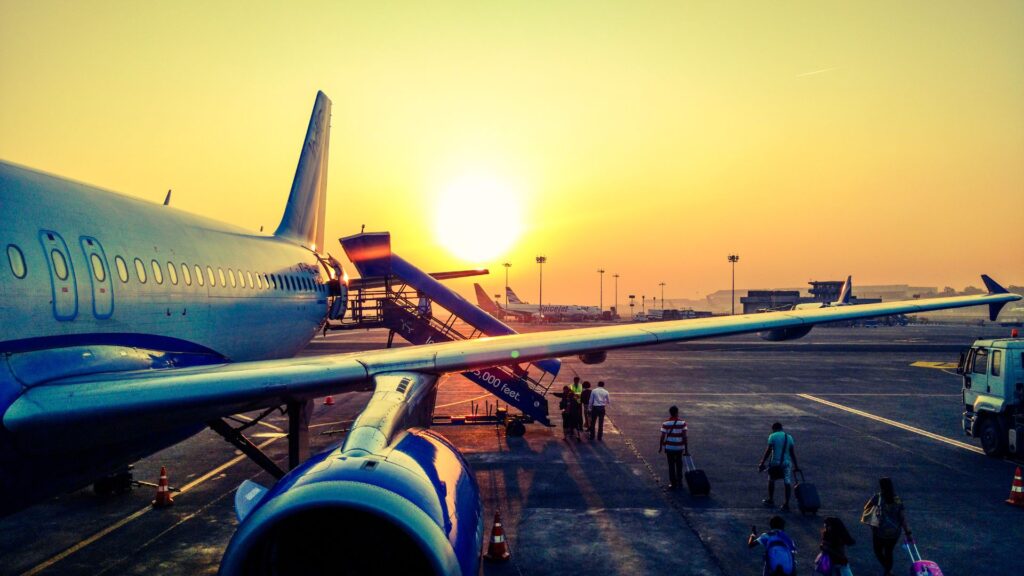
Generally, the best option is an arrival during afternoon or early evening at your destination. This allows you to sleep just couple hours after landing and adapt more easily to local time naturally, helping reset the body clock faster.
What Flights Should You Avoid?
Morning arrivals can sometimes be more difficult if you were unable to sleep well during the flight, since you may feel exhausted throughout the day.
Also, avoid flights that arrive just around midnight. You may feel fully awake after landing, but still need two to four hours to reach your final destination (accommodation) and settle in. Imagine going to bed at 4:30 AM is not a good way to reduce jet lag, as it can make your body clock even more confused.
Direct flights are often better than long layovers because they reduce total travel time and physical fatigue. Spending many extra hours in airports or changing schedules multiple times can increase your stress and make your jet lag worse.
In-Flight Strategies to Minimize Jet Lag
What you do on the plane matters just as much as your pre-trip preparation.
- Start by setting your watch or phone to your destination’s time zone as soon as you board. This small mental shift helps you start acting on the new schedule immediately.
- Hydration is key. Drink plenty of water throughout the flight and avoid alcohol and too much caffeine, both of which dehydrate you and mess with your sleep quality. Dry cabin air often makes the jet lag worse, so moisturizing your skin and using a saline nasal spray can also help.
- Try to sleep based on your destination’s bedtime. If it is nighttime where you are headed, put on an eye mask, use earplugs or noise-canceling headphones and recline your seat.
- If it is daytime at your destination, resist the urge to sleep. Walk around the cabin, watch a movie, read a book or chat with a neighbor. Staying active keeps your body alert.
- Eat light meals during the flight may also help reduce discomfort and improve sleep quality. Heavy meals can make your body feel sluggish and more tired. If it possible, don’t forget to try to time your meals to match the local mealtimes.
- Stretching your legs regularly and moving around the cabin can improve circulation and reduce stiffness after long flights.
Simple habits during your travel can help your body to adapt faster once you arrive.
Seat Selection for Better Sleep (Economy vs. Business Class)
Economy Class
Choosing the right seat can make or break your ability to sleep on a plane. Economy class is more affordable, but limited space and upright seating can make sleeping more difficult, especially on overnight flights.
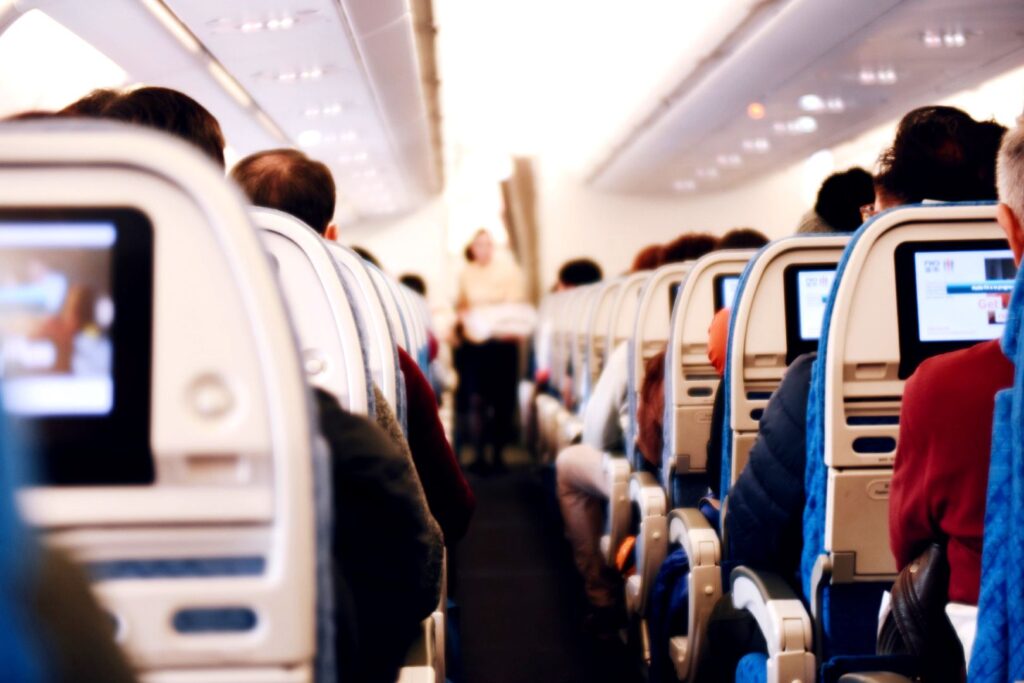
In economy class, the window seat is usually best for sleep. You can lean your head against the wall, control the window shade and avoid being woken up by neighbors needing to pass. The downside is having to climb over others to use the bathroom. For long-haul flights where sleep matters most, go with a window seat. Bring a neck pillow and eye mask to block out light and noise.
The aisle seat offers easier access to stretch and walk, but you risk being bumped by passing carts or seated neighbors and you cannot lean comfortably. If you wake frequently to use the bathroom or need to stretch, the aisle may suit you better.
Business Class
Business class is a completely different story. The seats are usually more comfortable because they offer extra legroom, wider seats, quieter cabins and sometimes fully flat beds on long-haul flights. That give you access of the best of both worlds: privacy and comfort with no one climbing over you. You can truly rest horizontally, which dramatically reduces jet lag.
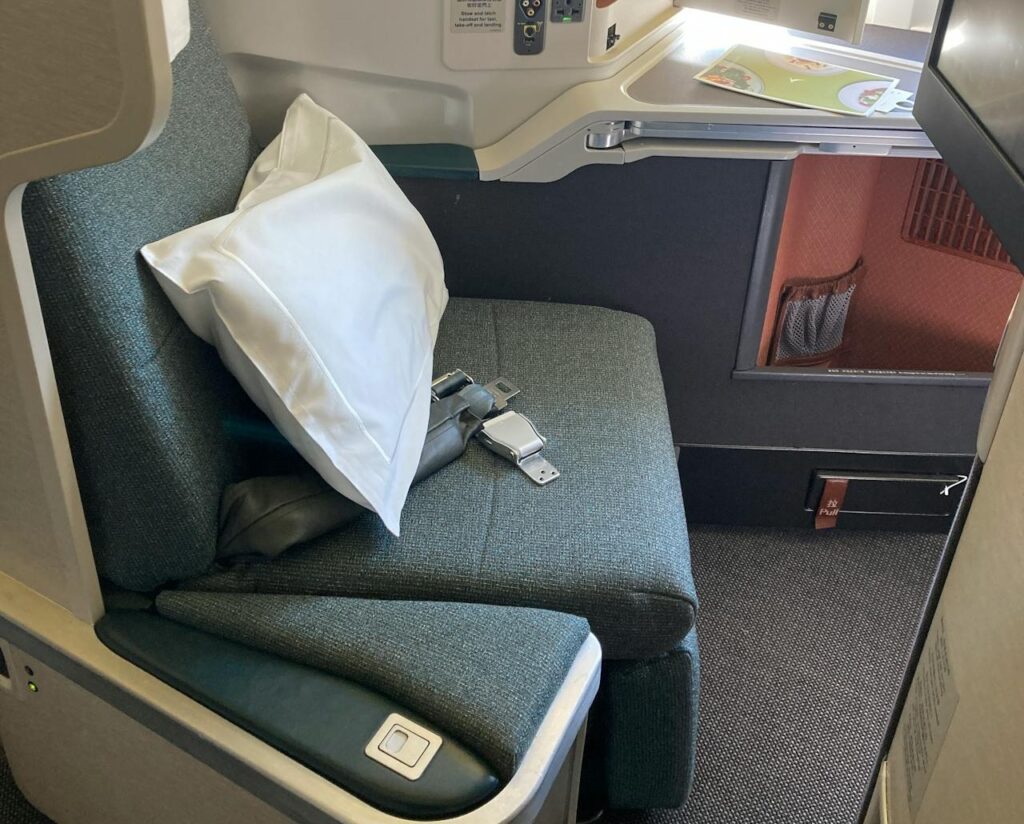
Premium economy with extra recline and legroom falls between the two. Ultimately, a window seat in any class beats an aisle seat for deep sleep. But if you can afford business class, the lie-flat bed is your ultimate weapon against jet lag.
Noise-Canceling Headphones
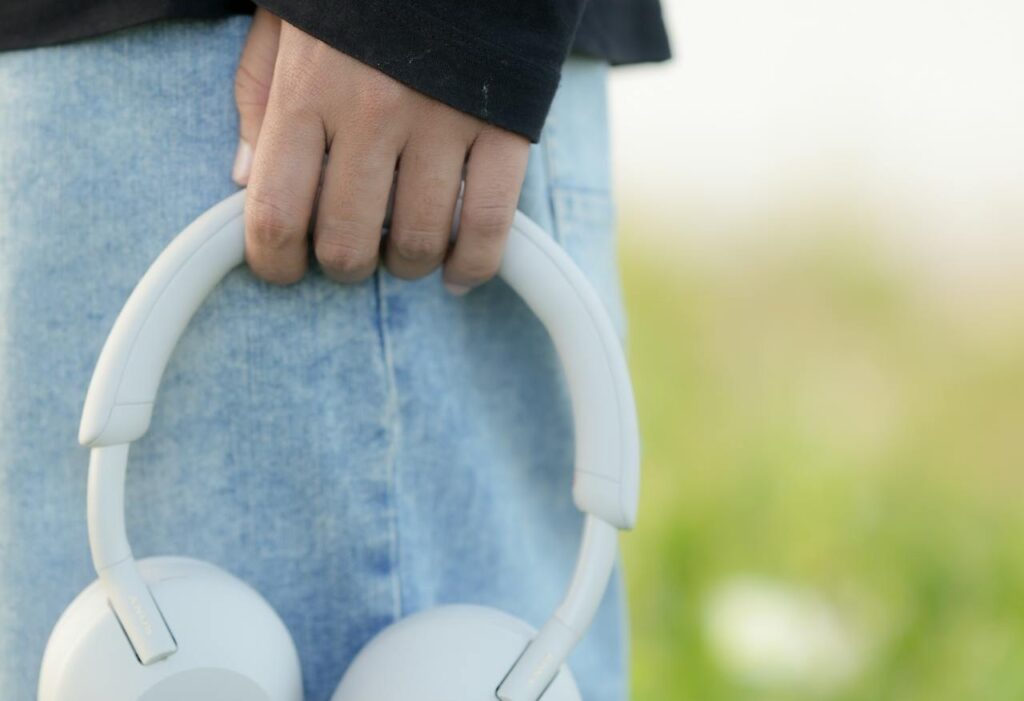
As travelers, noise-canceling headphones can help by drastically reducing the constant noise of the engines and the background conversations of other passengers. It basically gives you your own little quiet bubble on the plane, so you can actually chill out or get some sleep without hearing every little thing around you.
How to Choose Noise-Canceling Headphones?
Finding the right pair of noise-canceling headphones or earbuds comes down to matching the technology to your specific lifestyle. The key is looking beyond marketing. Most quality headphones combine both approaches, ANC handles the constant low-frequency rumble, while passive isolation blocks higher-frequency noises like conversations. Flying or commuting every day? Good ANC is honestly what matters most.
Understand the ANC:
Active Noise Cancellation (ANC) uses built-in microphones and processors to generate “anti-noise” sound waves that cancel out low-frequency sounds like airplane engine drone before they reach your ears. This technology is particularly good against the constant, rumbling noise you get on a plane.
Passive noise cancelling:
In contrast, passive noise reduction relies on physical barriers, such as thick memory foam ear cushions and the tight seal of the ear cups to block sound by basically building a little soundproof fort around your ears.
Key Features to Compare:
Comfort is critical, especially for a long flight. Make sure your over-ear headphones have that memory foam padding and if you’re going with earbuds, check that they come with different ear tip sizes. A bad fit? Yeah, that’ll ruin both your comfort and the whole noise-canceling magic.
Sound quality matters too, great ANC doesn’t mean much if your music sounds flat. Top performers like Sony, Apple and Bose balance excellent noise cancellation with rich detailed audio.
Form Factor: Over-Ear vs. In-Ear
Over-ear headphones generally provide the most powerful ANC and longest battery life. Some headphones offer 30 hours, while others reach 50-60 hours making them ideal for long flights and during long working session. They’re bulkier but often more comfortable for extended wear.
In-ear earbuds offer portability and convenience. However, battery life is shorter earbuds typically 6-8 hours per charge. Some charging case can add extra hours. Also be aware on many models, the sealed fit isn’t comfortable for everyone.
Beyond ANC
While active noise cancellation (ANC) remains a important feature, today’s best headphones offer extras that significantly improve usability and safety, like:
- Transparency/Ambient modes let you hear your surroundings without removing the headphones, which is essential when crossing streets or navigating in busy airports.
- Adaptive ANC automatically adjusts noise cancellation strength based on your environment, so you never have to manually toggle settings when moving from a quiet room to a loud place.
- Multipoint Bluetooth allows to connect two or multiple devices simultaneously. Making it easy to switch from watching a laptop video to taking a phone call without re-pairing.
The bottom line, test different models if it possible as fit and comfort are personal. Invest on top-tier ANC from Bose, Apple or Sony is worthwhile. Prioritize what matters most to you, battery life, comfort, portability or noise-cancelling and choose accordingly.
Best Noise-Cancelling Headphones in The Market Right Now
Apple AirPods Max: made with premium stainless steel and aluminum build for anyone who wants amazing sound quality and powerful noise cancelling during flights. Battery life is around 20 hours with ANC enabled. If you are an Apple user, it’s your best choice, because of their seamless connection with you iPhones, iPads and Macs. Their transparency mode also allows travelers to hear announcements without removing the headphones.
Bose QuietComfort Headphones: are widely known for travel comfort, reliable ANC performance and does an excellent job at reducing plane noise. The super soft ear cushions and lightweight design make them ideal for sleeping or relaxing during long journeys. Battery life reaches 24 hours with a quick charging. Many travelers choose Bose mainly for comfort and ease of use.
Sony WH-1000XM series: these are super popular for two reasons: insane noise cancellation and customizable sound setting. Battery life? Over 30 hours with ANC on, plus quick charging. Perfect for people who want great sound quality, smart adaptive listening, and long-lasting battery, especially on those long international trips. Their ANC is probably one of the best in the market.
How to Choose the Right Earmuffs?
When choosing earmuffs for sleeping on a plane, focus on the Noise Reduction Rating (NRR) a standard measurement (typically from 0 to 33 dB) indicating how effectively passive earmuffs block sound. A higher NRR generally means better noise reduction. Unlike electronic ANC headphones, passive earmuffs require no batteries and cannot fail mid-flight. On a commercial flight (the ambient noise is around 75-85 dB), look for an NRR of at least 20 dB, even 30+ dB. It’s ideal for airplane engine and crying babies. However, NRR is tested in lab conditions; real-world reduction is roughly around minus 7 dB.
Prioritize low-profile, compact designs with soft, washable foam cushions to avoid pressure points against the headrest or window. Comfort is just as important as noise reduction. Earmuffs that press too tightly against the head can become uncomfortable during long flights and make sleeping difficult. Lightweight models with soft padding are usually better for overnight travel.
Look for something low-profile and compact with soft, washable foam cushions. Your head will thank you when you’re leaning against the window or the headrest. Comfort matters just as much as noise reduction, honestly. If those earmuffs squeeze your head too tight, you will be miserable a few hours in and good luck trying to sleep. Go for lightweight models with soft padding. They’re way better for overnight flights.
Nutrition & Supplements That Fight Jet Lag
Not drinking enough or eating at random times could affect the jet lag. Your best defense? Drink water steadily during your flight, avoid too much alcohol and caffeine which since they can increase dehydration, disturb your sleep, cause headaches and make it harder to focus.
Avoid heavy meals two hours before sleep and consider fasting during the flight until your destination’s breakfast time. Yeah, it sounds a little extra, but it actually tricks your body into syncing up faster. Your stomach stops expecting food on your old schedule and starts adapting to the new one. Plus, flying on an empty-ish stomach means less bloating and grogginess when you land. Win, win!

Foods rich in protein can help you stay awake during the day, while meals containing carbohydrates may promote relaxation and sleep in the evening. Timing matters more than dosage.
If you’re into supplements, melatonin (0.5–5 mg taken at your destination’s bedtime) can signal your brain that it’s time to sleep. Magnesium glycinate promotes relaxation, deeper rest and sleep quality. Vitamin B12 taken in the morning at your destination may help regulate wakefulness.
However, supplements can affect people differently, so you should use them carefully and follow recommended guidelines. Always consult a doctor before starting new supplements.
Caffeine Rules for Jet Lag Recovery
When fighting jet lag, use caffeine strategically, not habitually. Caffeine can help reduce tiredness during jet lag, but timing is very important. Drinking coffee, tea or energy drinks early in the local morning or early afternoon can help you stay awake and adjust to the new time zone faster.
Avoid caffeine at your destination at least 6 to 8 hours before bedtime, because the effects can last about 6 hours and disrupt nighttime sleep. Don’t rely on caffeine to push through major fatigue, that will just push your internal clock even further off track. That delays your circadian adjustment. If you land in the evening, skip caffeine entirely and prioritize sleep pressure instead to let your body recalibrate naturally.
Exercise & Movement to Boost Energy
Exercise and moving around are seriously underrated for fixing your internal clock and fighting off that jet lag zombie feeling. Once you land, just go for a quick 20-minute walk outside. Nothing crazy. The sunlight hits your eyes and tells your brain, ‘Hey, stop making melatonin, we’re awake now.’ That little walk helps your body stay alert during the day and actually makes it way easier to sleep at night on the new schedule.
Do some light stretching or yoga in the morning. Your body needs it after hours of sitting in a tiny sea. For a real workout, stick to early afternoon as vigorous exercise late in the evening can raise your core body temperature and make falling asleep way harder than it already is
Even just doing tiny exercises in your seat during the flight like ankle rolls, calf raises and shoulder rolls can help to prevent stiffness and keeps your blood flow moving. The key is timing: match your activity level to the local time. Light movement when you should be awake, gentle stretching when you should be winding down. Avoid intense workouts at least 3 hours before bedtime. Your sleep will thank you.
Adjusting to Local Time Upon Arrival
Before takeoff, set your watch and phone to your destination time. After arriving, try to follow the destination’s schedule immediately by eating meals, sleeping and waking up according to the local time. Adjusting as quickly as possible is one of the best ways to reduce jet lag. Seek natural daylight. Morning sunlight is the most powerful cue for resetting your circadian rhythm, it tells your brain to you’re your melatonin production.

If you land in the morning, stay awake until at least 8 p.m. local time, no matter how tired. Take short power naps (20 minutes or less) if it absolutely necessary, but avoid longer sleep. Your body will adjust way faster that way.
For evening arrivals, expose yourself to bright light upon landing to push through until a reasonable local bedtime. On the flip side, if you land late at night, keep the lights low and stay off your screens. Melatonin can help a bit. And save bright light exposure for the morning
Final Thoughts
Jet lag isn’t inevitable, it’s manageable. It’s a common part of long-distance travel. Put together the right mix of smart habits and picking a good flight time, your body will adjust to the new time zone much faster. Little things really do make a big difference.

Every traveler reacts differently to the jet lag, so finding the strategies that work best for your body is important. The key takeaway? Start adjusting before you take off. With a good planning before, during and after your flight. You can dramatically reduce the time your body spends feeling disconnected and enjoy your trip sooner. These evidence-based strategies will allow you to arrive feeling functional and make the most of every destination from day one.
Have A Nice Trip!!!