Traveling with only a carry-on is one of the smartest ways to simplify your trip. By packing light, we can avoid baggage fees, skip long waits at baggage claim and move through airports with ease and move freely from train to street.
It also forces us to focus on essentials, making the trip more organized and stress-free. With the right packing strategy, we can travel comfortably while keeping everything we need within reach.
Why Less Luggage Means More Freedom
Carrying less luggage isn’t just about avoiding checked bag fees, it’s about reclaiming our travel experience. When you travel with only a carry-on, you move through airports like a local: no waiting at carousels, no wrestling overweight suitcases up narrow staircase and no panic when a flight changes gates.
But the real freedom begins once we land. You can hop directly on a train, walk to your hotel without dragging a trunk behind you or even change plans on a whim. That impulse to explore a different city? Take it.
With less baggage, you say yes to spontaneity, ease and presence. Instead of managing belongings, we are absorbing the moment. Less weight on our shoulders means more room for adventure. Pack light and you’ll discover that true travel freedom starts before we ever leave home.
How to Choose the Right Carry-on Luggage?
Focus on key factors like size compliance, weight, durability and organization to ensure it meets airline rules and your personal needs. A well-chosen carry-on has to be easy to maneuver, keeps essentials accessible and helps you stay organized throughout your trip.
- Check airline size limits: Most airlines allow carry-ons around 55 × 35 × 23 cm (22 × 14 × 9 in), but rules vary especially with budget carriers.
- Pick the right material:
- Hard-shell: better protection, water-resistant.
- Soft-shell: more flexible, easier to squeeze into tight spaces.
- Choose 4 spinner wheels: Easier to maneuver in airports compared to 2-wheel (roller) bags.
- Look for lightweight design: A lighter suitcase lets you pack more without exceeding weight limits.
- Check handle quality: Telescopic handles should feel sturdy and glide smoothly.
- Prioritize durability: Materials like polycarbonate or ballistic nylon last longer under frequent travel.
- Evaluate storage layout: Multiple compartments help organize clothes, electronics and documents.
- Consider expandability: Expandable zippers add extra space when needed (but watch airline limits).
- Security features: Built-in TSA-approved locks add convenience and safety.
- Laptop compartment: Useful for business travelers or easy airport security checks.
- Style & visibility: Bright or unique designs make your bag easy to spot and harder to mix up.
- Test maneuverability: If possible, roll it around smooth, quiet wheels are a big plus.
- Set a budget: Good carry-ons exist at all price points; balance cost with durability and features. A bag with polycarbonate shell and smooth wheels can survive years of travel.
Packing Rules for Minimalist Travel
Minimalist carry-on travel requires clear, practical tips. The following rules focus on efficient packing strategies. The goal is to streamline what we bring while maintaining practicality throughout our trip.
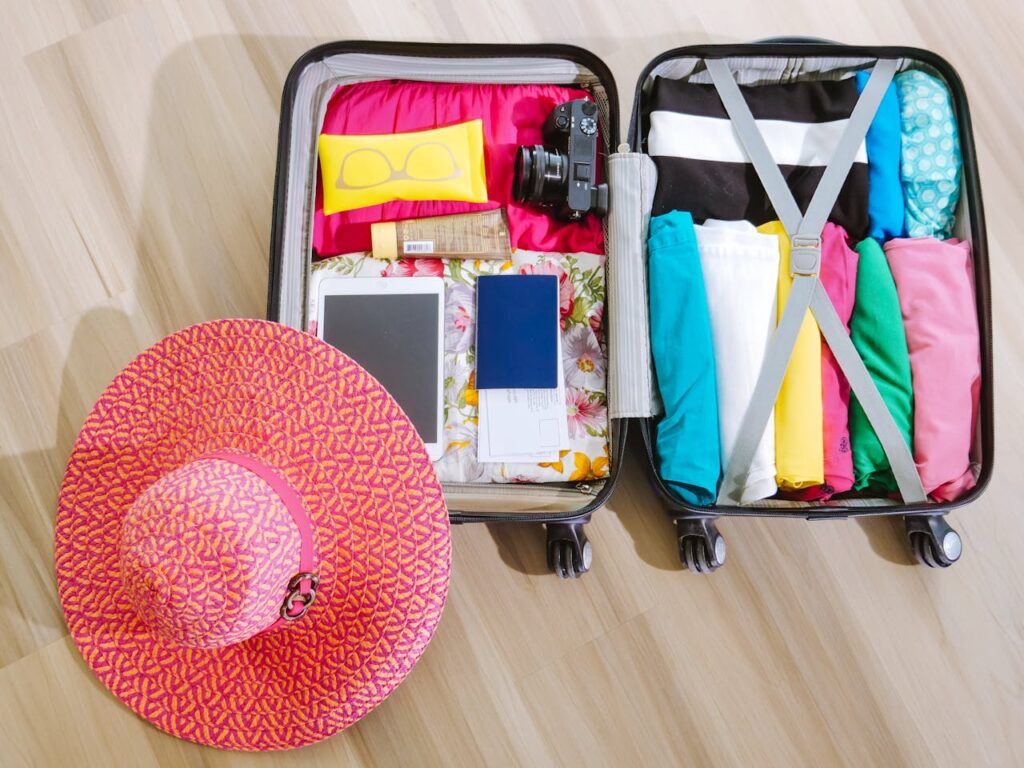
- Follow the 5-4-3-2-1 Rule: Limit yourself to 5 tops, 4 bottoms, 3 layers (jacket/sweater), 2 shoes and 1 hat or accessory. Mix and match everything.
- Choose a 3 Color Palette: Stick to neutrals (black, navy, gray, beige) so every top works with every bottom. No single use statement pieces.
- Wear Your Bulkiest Items: Board the plane wearing your heaviest shoes, jacket, jeans and any large accessories. This saves precious suitcase space.
- Roll, Don’t Fold: Rolling clothes minimizes wrinkles and maximizes space. Use packing cubes to compress and organize outfits by day or activity.
- Limit Toiletries to One Quart Bag: Take only travel-sized containers (under 3.4 oz / 100 ml). Use solid alternatives: shampoo bars, toothpaste tablets and lotion bars last longer and don’t count as liquids.
- Pack for One Week, Laundry for Longer Trips: Bring enough for 7 days max. Plan to hand-wash socks and underwear nightly. For longer trips, do laundry once weekly.
- No “Just in Case” Items: if you don’t have a specific, certain use for it, leave it. Anything truly needed can be bought at your destination.
- Fill Shoes with Small Items: Stuff socks, chargers or underwear inside your shoes to use every space.
- Test Pack Before You Go: Pack fully at least two days early. Walk around your home with the bag for 20 minutes. If it’s heavy or awkward, remove some more items.
Rolling vs. Folding: Best Ways to Maximize Space
Rolling is generally the superior method for maximizing space in a carry-on. Unlike folding, which creates rigid creases and leaves dead air between layers, rolling compresses fabric into tight, cylindrical bundles that nestle closely together. This technique is ideal for T-shirts, underwear, socks and casual pants items that don’t require crispness.
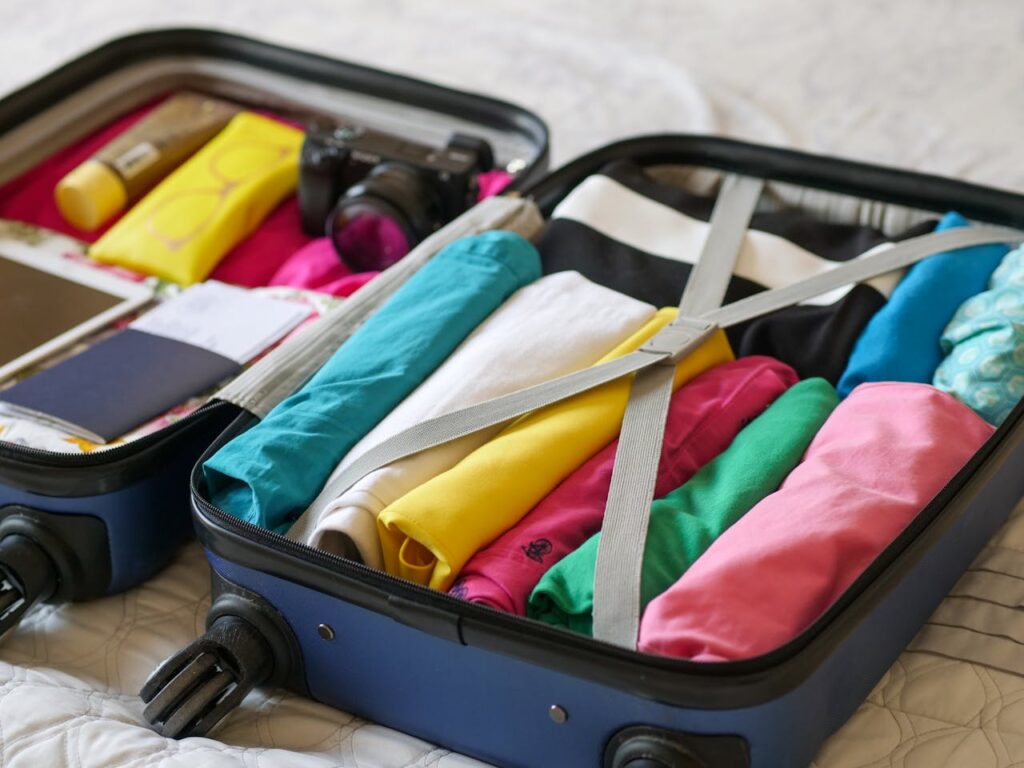
However, folding still has its place: structured blazers, dress shirts and linen pieces should be folded flat with tissue paper to avoid deep wrinkles. For the best of both worlds, use rolling for the bulk of your clothes, then lay folded stiff items on top. Packing cubes enhance either method by keeping everything compressed and organized. Ultimately, rolling wins for space efficiency, but strategic folding protects your polished pieces.
How to Pack Shoes Efficiently (And Which Ones to Bring)
Pack shoes wisely to save precious space on your carry-on. Choose only one or two or versatile pairs: one neutral walking shoe and one dressy option. Wear the bulkier pair on the plane.
- Limit to 2 versatile pairs: Choose shoes that match multiple outfits (e.g., neutral sneakers, casual dress shoes and sandals). Prioritize comfort and practicality over style variety to avoid overpacking.
- Remember wear the bulkiest pair in transit: Boots or chunky sneakers take up the most space, wear them on the plane to free up room in your carry-on.
- Use packing techniques to save space: Place shoes along the edges or bottom of your carry-on. And don’t forget to fill them with socks, chargers or small items to maximize every inch.
- Keep shoes separate and clean: Use shoe bags, shower caps or plastic covers to prevent dirt from touching your clothes.
- Choose lightweight, flexible options: Select foldable flats or breathable shoes that compress easily, making them ideal for tight carry-on space.
TSA Rules for Carry-on
Navigating TSA rules for carry-ons is simple once you know the basics, allowing you to move through the airport quickly and avoid delays.
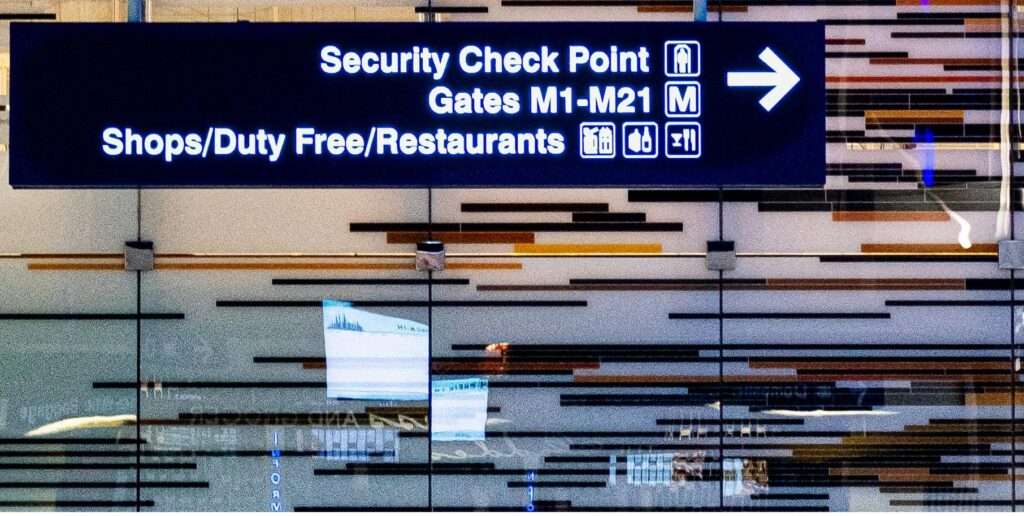
- Follow the 3-1-1 liquids rule: Liquids, gels and aerosols must be in containers of 100 ml (3.4 oz) or less, placed in one clear, resealable 1-quart (1 liter) bag, with one bag per passenger.
- Electronics screening: Laptops, tablets and large electronics must usually be removed from your bag and placed in a separate bin unless you have expedited screening.
- Prohibited items: Sharp objects (knives, scissors with long blades), firearms and certain sports equipment are not allowed in carry-on luggage.
- Food rules: Solid food is generally allowed, but liquids (soups, sauces, spreads) must follow the 3-1-1 rule.
- Shoes, belts and jackets: You may be asked to remove them during screening and place them in bins.
- Liquids exceptions: Medications, baby formula and breast milk are allowed in larger quantities but must be declared at security.
- Duty-free liquids: Allowed if sealed in a tamper-evident bag with proof of purchase.
Things You Cannot Bring in a Carry-on
Security rules restrict certain everyday items in your carry-on. Knowing what’s banned, avoids confiscation and keeps your trip stress-free from the checkpoint.
Sharp Objects
Sharp items such as knives, box cutters and certain scissors are not allowed in carry-on luggage because they can pose a safety risk. Even small blades may be restricted depending on their size and type.
Hazardous Materials
Toxic or corrosive substances, including strong chemicals and certain batteries, are banned due to their potential to cause harm or damage during transport.
Tools & Heavy Objects
Large tools that could be used as weapons, such as hammers or drills, are not allowed in carry-on bags. Smaller tools may also be restricted depending on their size.
Sports Equipment
Sports gear like bats, clubs and sticks are generally prohibited because they could be used to cause injury. Some items may be allowed in checked baggage instead.
Other Restricted Items
This list highlights a few common prohibited items for carry-on luggage. For a complete and up-to-date list of all restricted goods, including specific exceptions and size limits, please visit the official TSA website before you pack: https://www.tsa.gov/travel/security-screening/whatcanibring/all-list
Must Have Travel Accessories as Carry-on Traveler
As carry-on traveler, smart accessories mean less stress and more space. Here is the list:
- Compression Packing Cubes: Maximize space by compressing clothing up to 80%; use separate cubes for clean/dirty or outfit grouping for quick access without unpacking.
- Cable Organizer Pouch: Prevents tangled cords and lost small items like SD cards, adapters or spare charging cables; clear mesh bags or zippered pouches work best.
- Reusable Collapsible Water Bottle: Empty through security, then fill at hydration stations; silicone designs flatten to pocket size when not in use.
- Tote Bag That Doubles as Personal Item: Lightweight, foldable bag for duty-free purchases or extra souvenirs; can serve as backup if checked luggage is delayed.
- Toiletry Kit with TSA compliant Leak-proof Bottles: Silicone squeezable bottles (30ml–100ml) with labels; attach outside strap for quick security retrieval.
- Travel-Size Lint Roller: Removes crumbs and pet hair from clothes and seat fabric after long flights, surprisingly useful for maintaining a neat appearance upon arrival.
- Keychain Hand Sanitizer & Disinfecting Wipes: Wipe down tray tables, armrests and air vents; keychain clip keeps sanitizer accessible without digging through bag.
- Eye Mask with Contoured Cups: Blocks light without pressing on eyelids; improves sleep quality on red-eyes or bright early-morning flights.
These items keep you organized, comfortable and prepared, all while fitting easily under the seat or in overhead bins.
Extra Tech Essentials: Chargers, Adapters and Gadgets
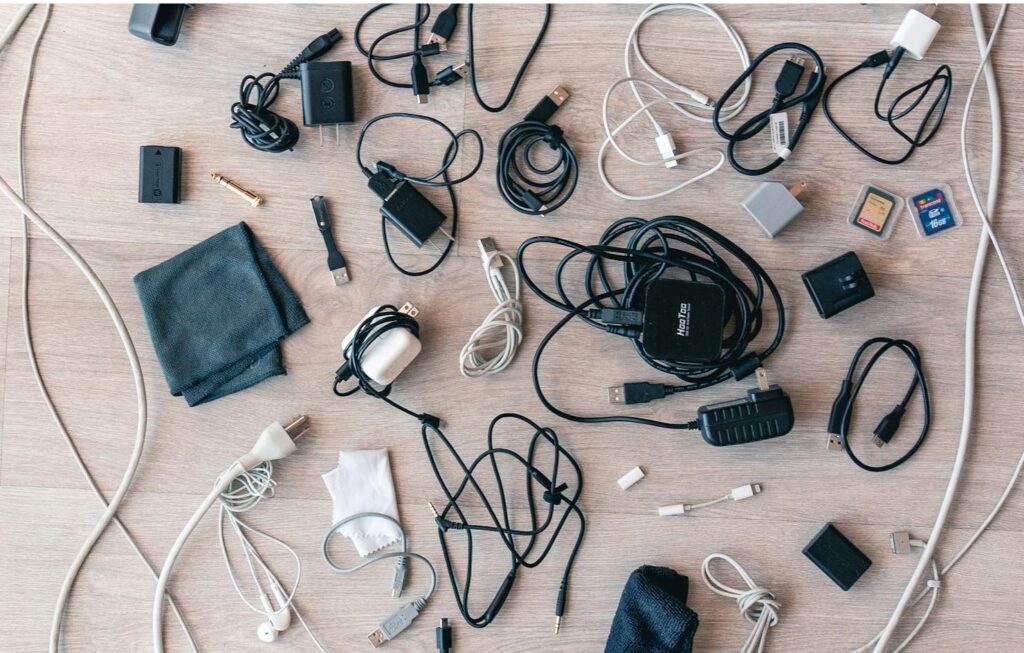
- Compact power bank: Can keep your devices charged during long flights or layovers
- Multi-port USB charger: Charge multiple devices with one plug, saves space and outlets.
- Phone Stand: Slim case with a built-in stand adds convenience without extra bulk.
- Laptop or Tablet: Choose a lightweight laptop like the MacBook Air for productivity on the go. Or a compact tablet like the iPad Air or Samsung Galaxy Tab, paired with a keyboard cover, is ideal for productivity, reading and entertainment on the go.
- Noise-Canceling Earbuds: Reduces engine hum and gate announcements. Compact true wireless earbuds are ideal for carry-on due to their small size.
How to Do Laundry While Traveling
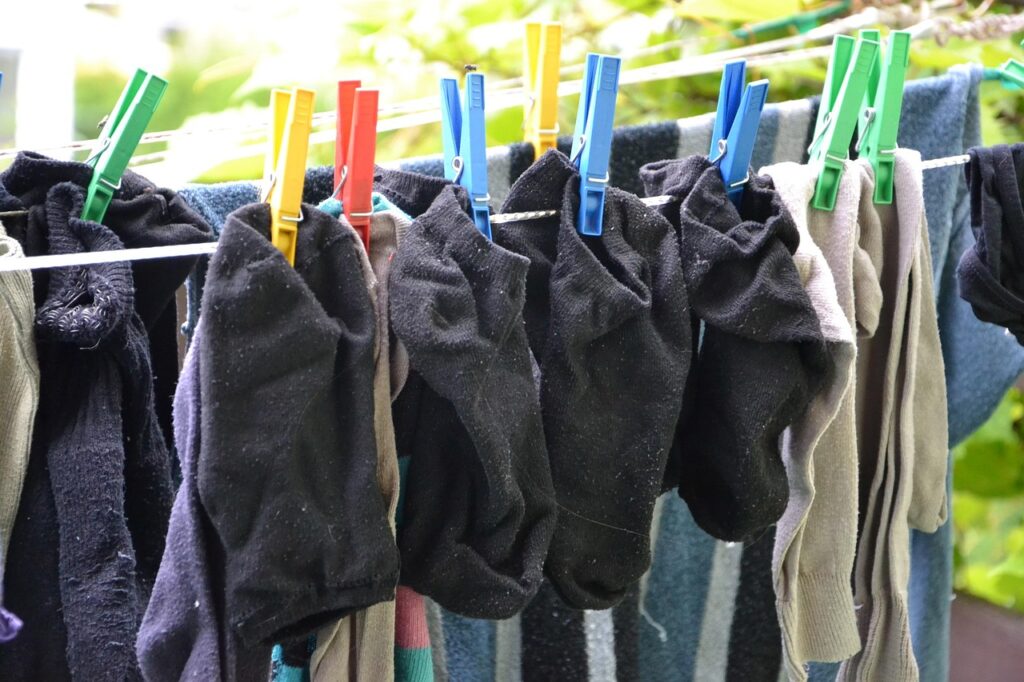
Doing laundry while traveling with just a carry-on isn’t a chore, it’s a necessity. Plan to wash essentials along the way using these simple tips:
- The sink method: Wash clothes in the sink or shower using warm water
- Pack a flat sink stopper: Many hotel sinks lack plugs; bring a universal silicone stopper.
- Use solid laundry sheets or shampoo: No liquid spills; eco-friendly sheets take zero space.
- Towel roll trick: Roll wet clothes in a towel to remove excess water quickly
- Bring a portable clothesline: Elastic with suction cups fits over shower rods or balconies.
- Choose quick-dry fabrics: Merino wool, nylon or polyester dry overnight; cotton does not.
Mistakes to Avoid When Flying Carry-on Only
One of the biggest errors is ignoring your airline’s size and weight limits. Each carrier has different bag dimensions even if your bag fits general standards, some airlines have stricter size or weight limits, especially on regional or international flights. Always check before packing, not at the gate.

Some carry-ons have an expansion feature that adds 1 to 2 inches. Using it to pack more often makes the bag too large for sizers. Even worse, expanded bags get gate-checked when they don’t fit bins. Pack without expansion, use that extra zipper only for the return trip if you buy souvenirs.
We often underestimate the impact of souvenirs or return-trip packing. Leaving no extra space can make the journey back stressful, forcing you to repack at the airport or pay unexpected fees.
Many travelers focus solely on their carry-on roller bag and forget they are allowed a second under-seat personal item. Wasting that space is a major error. Another common mistake forgetting to pack a change of clothes in your personal item. If your carry-on gets gate-checked due to full overhead bins, you could land without essentials. Always keep one outfit, medications and valuables in a small under seat bag.
Additionally, forgetting offline access to important documents, like boarding passes, hotel details or maps can be problematic if your phone dies or you lose connectivity.
Also, when you fly with carry-on, you must board early enough to secure overhead space. Overhead bin spaces are limited, set a gate arrival reminder 15 to 35 minutes before boarding starts.
Finally, many travelers skip testing their setup before departure. Doing a trial pack or short trip with your carry-on helps identify what’s missing or unnecessary. Avoiding these subtle mistakes will make your trip smoother and less stressful.
How Long You Can Realistically Travel with One Carry-on
With a standard carry-on and personal item, we can travel for weeks, months or even a full year. If you are willing to do laundry every 5 to 7 days and focus on interchangeable outfits. Realistically, most travelers hit a comfort wall at day 10 to 14.
For trips under one week, a carry-on is easy. For two weeks, it requires strategic packing. For one month or more, it becomes a lifestyle. You learn to sink-wash, choose quick-dry fabrics and embrace repeating outfits. The real limit isn’t space. It’s your tolerance for repetition and laundry.
Season and destination matter: Summer travel is easier (thin clothes). Winter travel eats space with bulky layers. Business trips are harder (need suits or multiple shoes). If you do leisure backpacking, you can go for months.
Ultimately, there’s no strict limit on how long you can travel with just a carry-on, as long as you maintain a simple, efficient system that works wherever you go.
How to Fit Your Travel Souvenirs in Your Carry-on? (On the Return Trip)
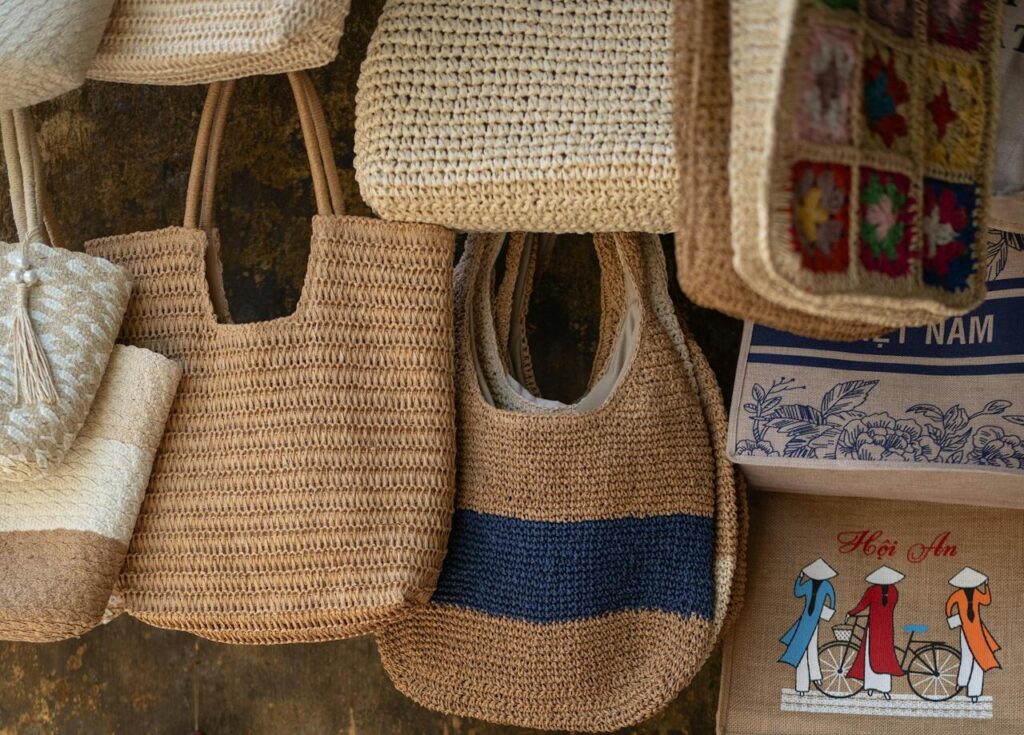
The return trip is where we panic the most as carry-on travelers. We left with a perfectly packed bag, but now we have gifts, local crafts and that extra sweater we bought. Here’s how to make it all fit:
- First, leave packing room intentionally. Before departure, fill only 75% of your carry-on and personal item. The empty space is your souvenir budget.
- Second, repack strategically: move bulkier clothing into worn layers for the flight and place souvenirs in the center of your bag for protection.
- Third, compress soft souvenirs. Roll t-shirts or scarves into dead spaces like shoes or the gaps between packing cubes.
- Finally, if you’ve accumulated more than expected or you have truly large items consider shipping items home. That pottery vase or wooden carving? Send it via mail.
A little foresight ensures you can bring back meaningful souvenirs without turning your return trip into a packing headache. Allowing you to accommodate unexpected finds while keeping your carry-on light and organized.
Conclusion
Carry-on travel it’s about traveling with intention. It changes how you experience a destination. Instead of managing luggage, you focus on the moment. Over time, you refine what truly matters and what can be left behind. It encourages us to take smarter decisions and creates a smoother, more flexible way to explore the world.

The secret nobody tells you? Carry-on travel changes how you experience a place. When you’re not dragging a 50-pound checked bag, you become agile. You sprint for a connecting train. You walk 20 minutes to a hotel instead of waiting for a taxi. You check out of your hostel at 10 AM and explore all day without luggage lockers holding you back.
Traveling light is ultimately a practice in trust. Trust that you can wash a sock in a sink. Trust that you can buy a toothbrush anywhere. Trust that you need far less than marketing tells you. And once you master it? You’ll never hear the words “checked baggage” without smiling. 😉